
MIN-Promotionsportal
MIN-Promotionsportal
Foto: UHH/shell
18. Juni 2026
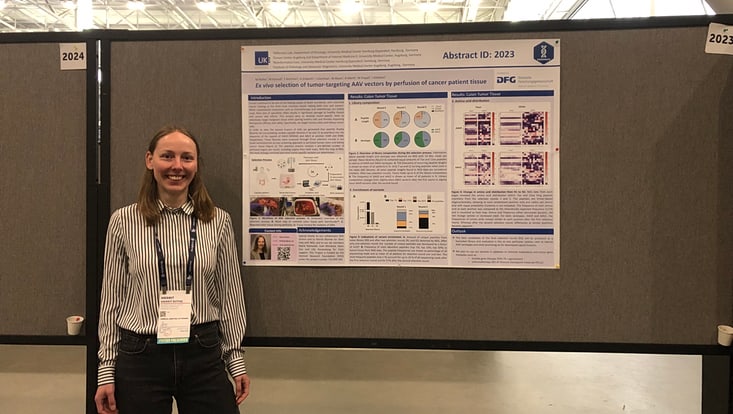
Foto: UHH/Rothe
With the financial support from the MIN Graduate School, I had the opportunity to attend the annual conference of the American Society of Gene and Cell Therapy (ASGCT) in Boston, USA. The application procedure was well described on the website and whenever questions arose, the MIN Graduate School provided very helpful and friendly support. In particular, they assisted me in clarifying my employment status between the University of Hamburg and the UKE, which was important for the administrative process after receiving the grant.
Travelling to the USA was relatively uncomplicated. I applied for an ESTA, which cost approximately 40 USD and was approved within an hour. I already had travel health insurance that covered the United States. Boston was relatively easy to reach from Hamburg, and the conference center was centrally located. Since accommodation suggested by the conference organizers was too expensive, I arranged my own lodging within walking distance of the conference center, which made commuting very convenient. I noticed that accommodation and dining costs in the USA were significantly higher than in Germany.
The conference itself was highly valuable for my scientific development. I enjoyed to exchange ideas with researchers from different backgrounds and to receive feedback on my project, including constructive criticism. This will help me strengthen my research and prepare for writing my thesis and for its defense. However, I was surprised by the strong industry presence at the conference, many discussions focused on production processes, scalability, and cost reduction rather than purely academic research.
Before travelling, I contacted collaboration partners in the United States and arranged meetings during the conference. I also reviewed the delegate and abstract lists in advance to identify researchers I wanted to speak with and prepared concise ways of introducing both myself and my project. This preparation turned out to be extremely valuable, as the conference schedule was intense and exhausting.
One of my personal highlights was the keynote lecture by Terry Pirovolakis. He shared the story of his son Michael, who was diagnosed with the ultra-rare disease SPG50, and described how his family raised millions of dollars and connected researchers worldwide to develop a potential gene therapy treatment. His talk was moving and served as a powerful reminder that scientific research can have a direct and life-changing impact on patients and their families.